Face screen
5inch_displayThe 5 inch screen that is the face, behind the window at the front of the head.
Model5" display
2026
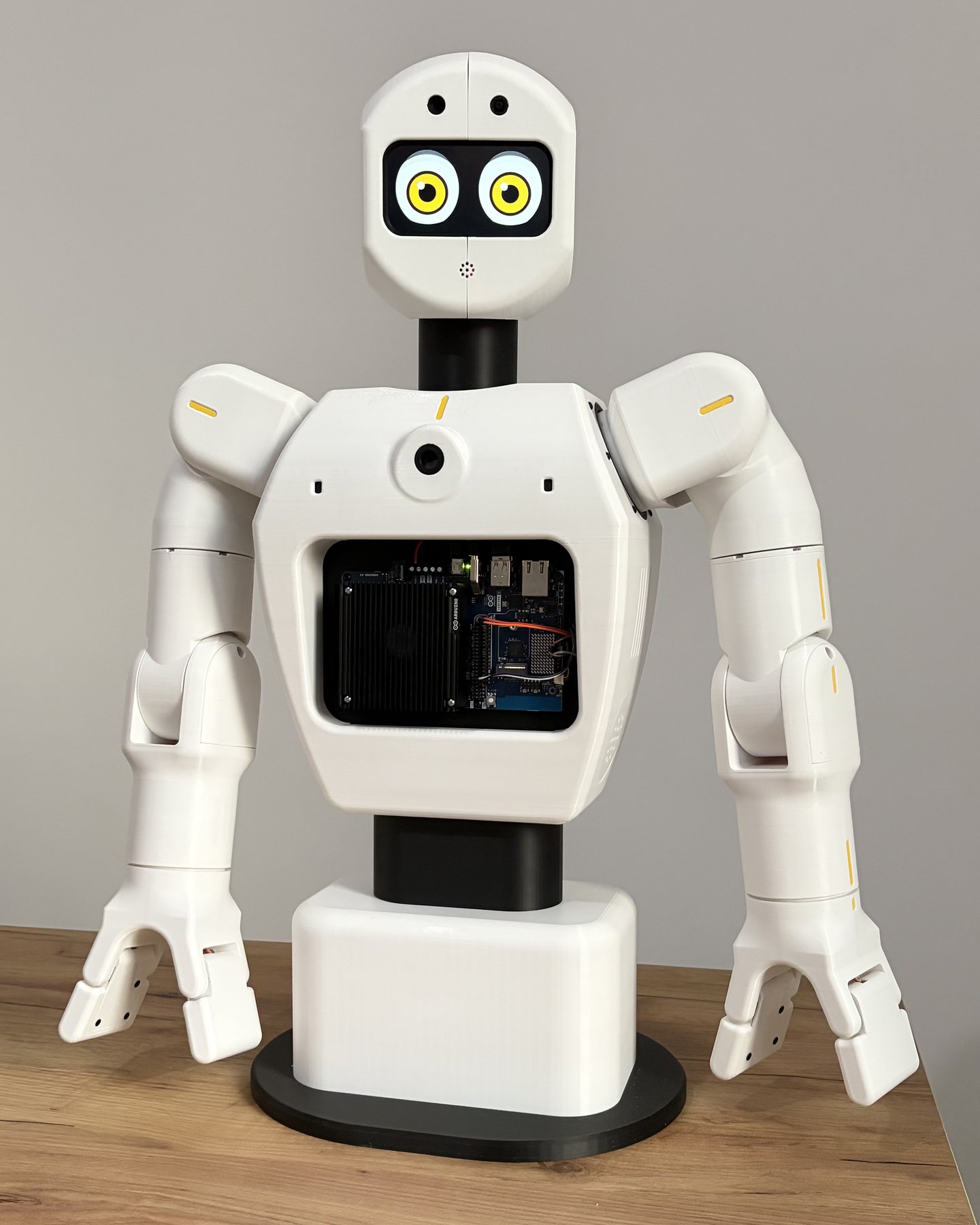
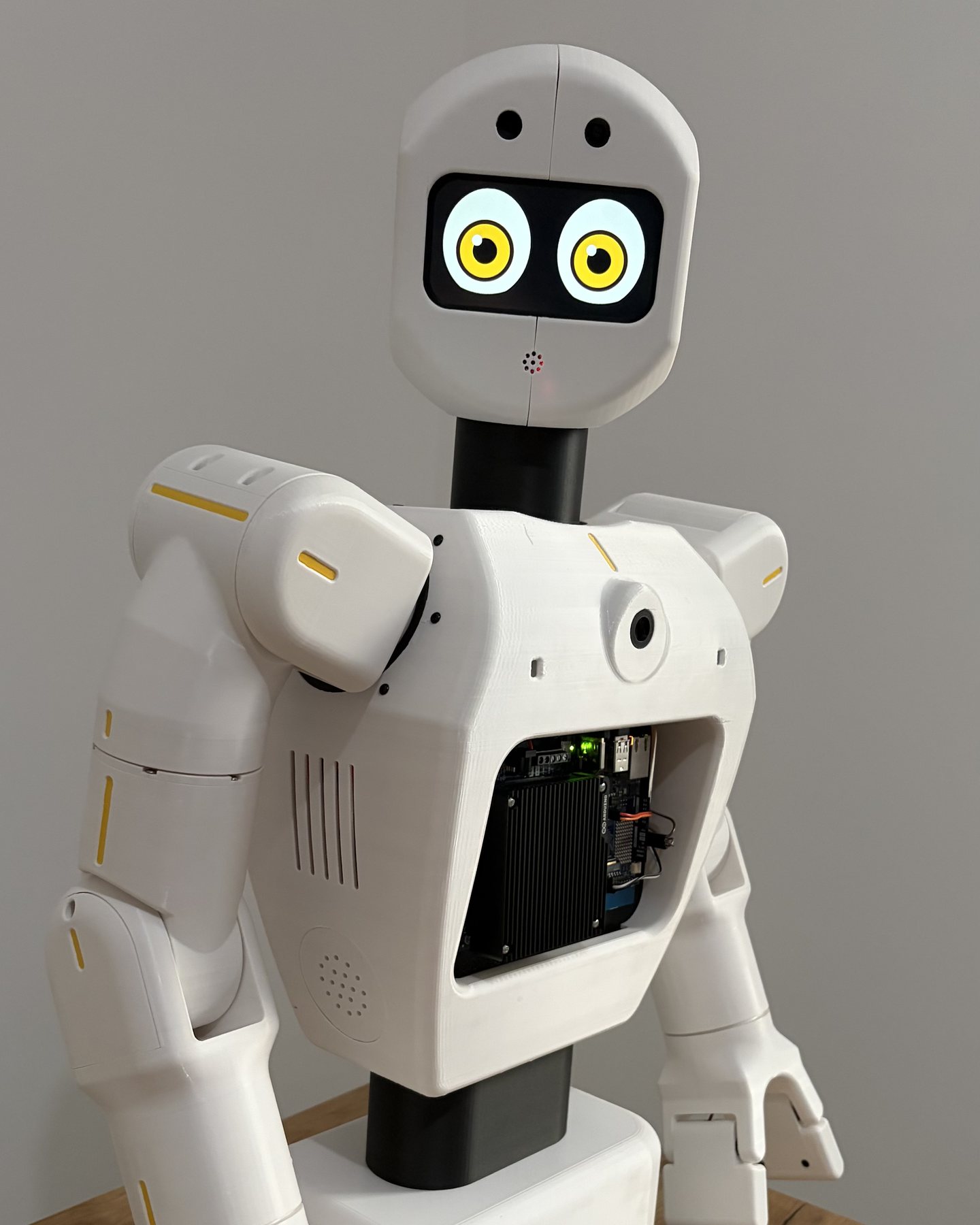
Every part below is clickable. Open one to see what it is and where it sits. Like Nuvi, this robot was made for Arduino: a desktop humanoid built around the VENTUNO Q, the board that pairs a Qualcomm processor for AI with a microcontroller for real-time motor control. Its name is Neo. It sees, listens, talks and learns, and all of it runs on the robot itself: no cloud, no internet. The upper body stands on a base that holds the power supply. The head turns and tilts on the neck, the arms move from the shoulder down to the wrist, and each hand closes two fingers. Through a window in the chest you can see the board at work.
FilesOpen source project: the 3D models and the code will be published on Arduino Project Hub.
Every printed part, with its function and print settings.
The 5 inch screen that is the face, behind the window at the front of the head.
The ball bearing where the shoulder meets the torso.
The main board, at the front of the torso, behind the chest window. A Qualcomm Dragonwing processor for vision and language models, and an STM32 microcontroller for real-time control, on one board of 16 × 10 cm.
Closes the torso from behind.
Sits on the outside of the shoulder bearing.
Halfway down the upper arm, where the arm turns on itself.
The plate the robot stands on.
Keep the board off the plate.
Closes the bottom of the hips, on top of the base plate.
The lower half of the upper arm, down to the elbow.
Close the lower half of the upper arms from behind.
The body of the robot: the board, the servo driver and the shoulder servos sit inside it.
In the middle of the chest, below the neck: it recognises the objects you hand Neo and sees what the hands are about to take.
Holds the chest camera in the middle of the chest.
Two pieces at the top of the face, above the screen: they hold the camera in the head, the one that follows people.
In the lower part of the torso.
The plate behind the main board that carries the servo driver.
Close the forearms on the outer side.
Close the forearms on the side facing the body.
Turns the serial line of the main board into the bus the servos share. It sits on the plate behind the board.
The thin plate in front of the face screen.
Two sensors across the chest, one on each side of the camera.
Two per hand.
Cover the inner face of each finger, the side that grips.
The top of the upper arm, just below the shoulder.
Close the top of the upper arms.
Halfway down the upper arm, where the arm turns on itself.
From the elbow to the wrist.
Close the back of the forearm at the wrist.
Sits next to the elbow servo.
Hold the servo at the bottom of the forearm.
The palm the two fingers are hinged to.
In the torso, next to the main board.
Inside the hand, where the fingers are hinged.
Small pieces along the middle of the head, front, top and back, where the two halves meet.
Closes the head from behind.
The two halves of the head, left and right, closed around the face screen.
The two arms on either side of the head servo.
The lower body: the power supply sits inside it.
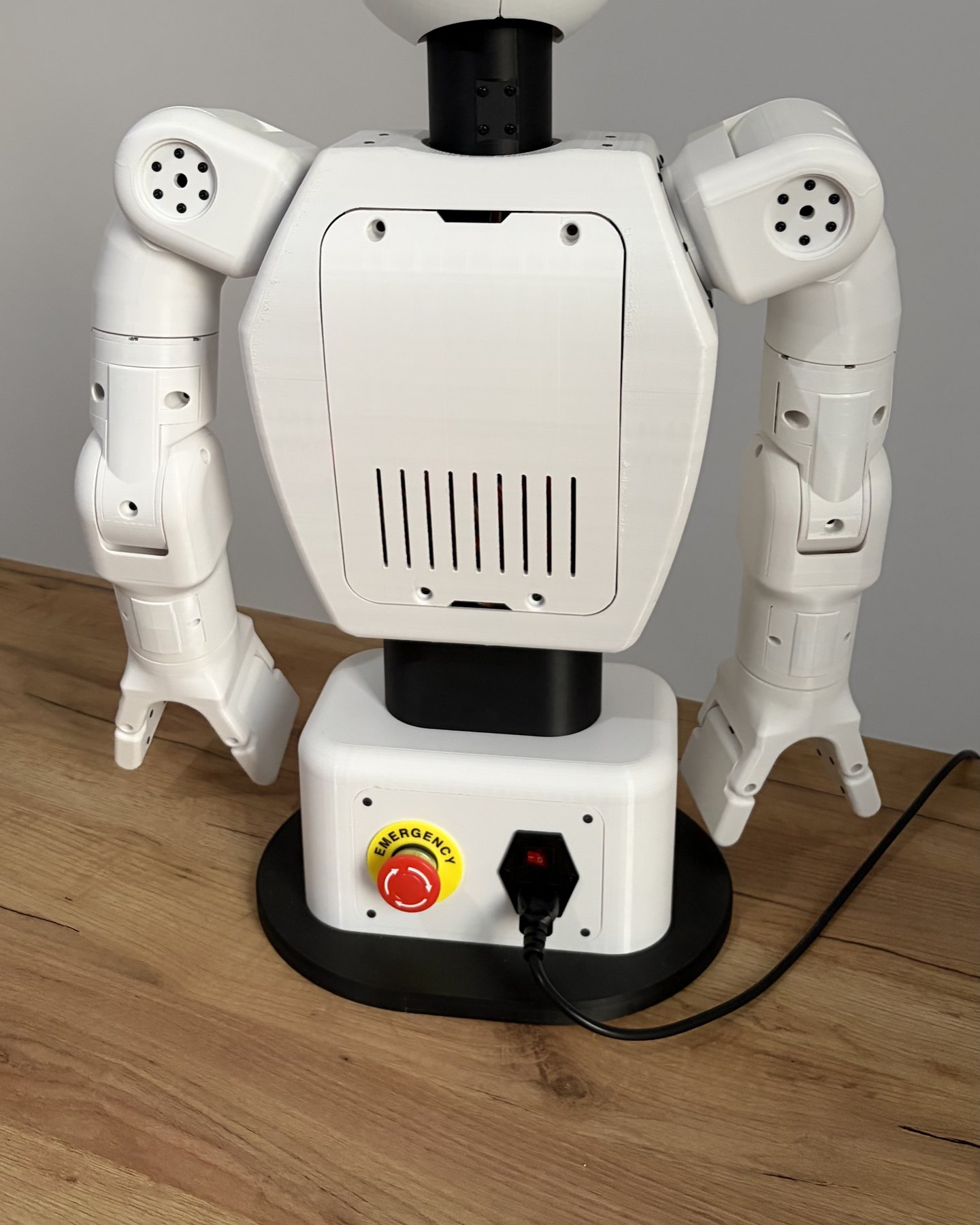
Closes the hips from behind and carries the power inlet and the stop button.
Halfway down the upper arm, where the arm turns on itself.
Sits on the inside of the shoulder bearing.
Hold the bottom of the back cover.
The serial bus servos at the joints: two in the neck, five in each arm, the STS3250 at the shoulders.
The column between the torso and the head.
The two links between the neck and the head, one on each side.
Joins the two neck links at the back.
Where the neck meets the head.
The base of the servo that turns the neck, inside the top of the torso.
Holds the servo inside the head.
Hold the neck servo from the sides.
The plate at the top of the torso the neck stands on.
On the back of the base: the mains cable plugs in here, with the power switch built into the inlet.
A 12 V, 40 A supply inside the hips, fed from the mains inlet on the back.
Hold the power supply inside the hips, one on each side.
Holds the servo at the shoulder that lifts the arm.
The back half of the shoulder joint.
The front half of the shoulder joint.
Holds the servo that turns the lower part of the arm.
The two large pieces between the torso and the arms.
Closes the ball bearing of the shoulder.
Where each shoulder is attached to the torso.
Close the shoulder joints from behind.
Connect each shoulder servo to its shoulder.
Hold the shoulder servos inside the torso.
Runs across the torso and ties the two shoulders together.
The two round grilles on the sides of the torso.
The red mushroom button on the back of the base, next to the power inlet.
Hold the top of the back cover.
Holds the Arduino Ventuno Q at the front of the torso.
Between the torso and the hips.
Electronics
At the front of the torso, visible through the chest window, sits an Arduino VENTUNO Q. Its Qualcomm Dragonwing processor runs vision and language models, and its STM32 microcontroller handles real-time control, on the same board. Behind it, a driver board runs the serial bus servos at the neck, shoulders and arms, and a PWM driver runs the small servos in the hands. A 5 inch screen is the face. One camera in the head follows people, and one in the chest sees what the hands are about to take. Power comes from the mains through an inlet with its own switch, into a 12 V 40 A supply inside the hips, with a mushroom emergency stop next to it.
Software
Neo answers to its name. Say “Hey Neo” and it listens, thinks and answers out loud, with speech recognition (Whisper), a language model (Qwen3 4B) and a voice (Piper), all running locally. The head turns towards whoever is speaking, and the eyes on the screen follow them and show how it feels. The chest camera recognises the objects you hand it, so Neo can take them, look at them and give them back, or play a game of dice against you. It also learns by demonstration: move its arms by hand and it remembers a pose or a whole routine by name. In mirror mode, one arm copies the other as you move it. Everything is tied together with Arduino App Lab: sketches on the microcontroller, Python on Linux. A web control center, served by the robot itself, shows a live 3D model and lets you drive every joint, with collision checking.